
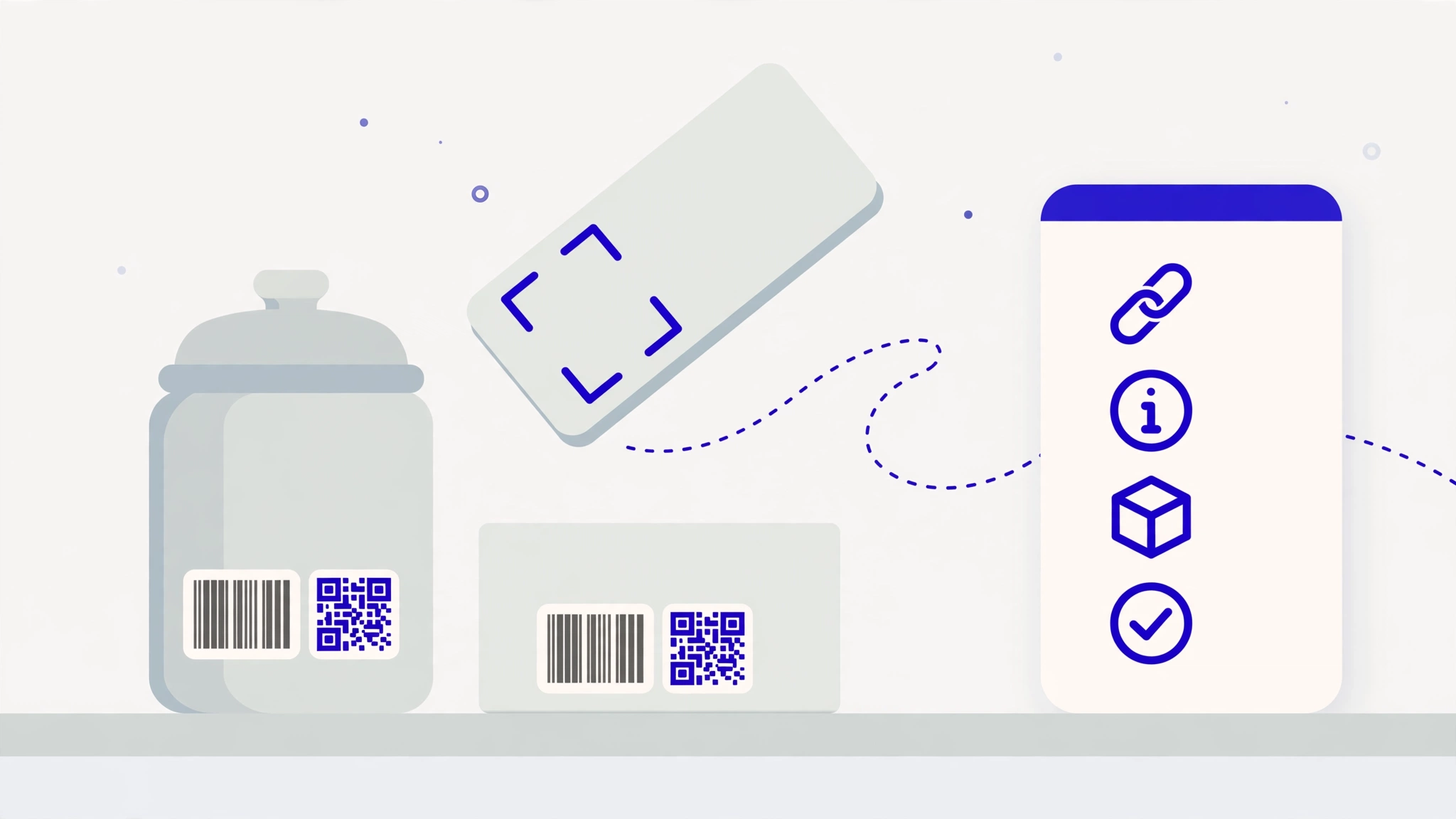
A GS1 Digital Link puts a product's GTIN into a web link, so one code on packaging serves shoppers, retailers and supply-chain systems at once. GS1 codes are created from the GS1 section of the dashboard, and availability depends on your plan.
The link format
text
https://yourbrand.com/01/09506000149308/10/ABC123/21/XYZ01is the GTIN (the only required part).10is the batch or lot,21the serial number,22a consumer product variant.17is an expiry date in YYMMDD form, for example271231for 31 December 2027.
GTIN rules
- The GTIN must be 8, 12, 13 or 14 digits.
- The last digit is a check digit calculated from the others. DynamiHost validates it and rejects a GTIN whose check digit is wrong, because such a code would be rejected by retail systems too.
- Type the GTIN from your GS1 licence paperwork, including any leading zeros. Leading zeros are significant in GTIN-14.
Which extra data to add
- Batch only is right for food and cosmetics, where recall and expiry matter.
- Batch plus expiry lets a scan land on batch-specific information.
- Serial makes every individual item unique: the strongest option, and the one that needs your production line to print a different code per item.
A GS1 code still behaves like a DynamiHost dynamic code behind the link: you can update where it forwards, protect it, and read its scans, while the printed structure stays standards compliant.